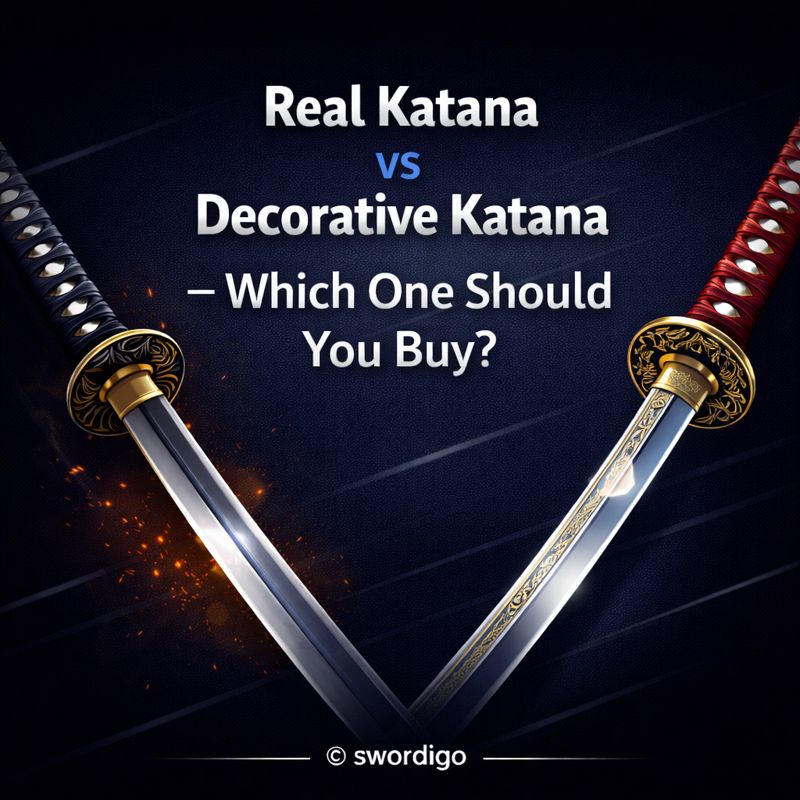
Decorative Katana vs Traditional Japanese Katana: Understanding the Difference
Introduction
If you are interested in a Katana sword, you may come across different types of products described as traditional, decorative, collectible, or Katana-inspired.
Although these products can share a similar Japanese-inspired appearance, they can differ considerably in their materials, craftsmanship, historical significance, and intended presentation.
This guide explains the differences in a simple way, with a focus on collecting, display, craftsmanship, and Japanese cultural heritage.
What Is a Traditional Japanese Katana?
A traditional Japanese Katana is a historical form of Japanese sword associated with centuries of specialized craftsmanship.
Historical examples can vary depending on their period, maker, school, materials, and construction methods.
Collectors and historians may examine characteristics such as:
-
Blade profile
-
Overall proportions
-
Surface characteristics
-
Hamon and Hada
-
Tsuba design
-
Tsuka construction
-
Saya decoration
-
Historical provenance
Authentic historical Japanese swords are generally studied as cultural and historical artifacts.
What Is a Decorative Katana?
A decorative Katana is a modern piece created primarily for visual presentation and collection.
Modern decorative and Katana-inspired pieces can be designed to reproduce the distinctive appearance of Japanese swords while using contemporary manufacturing methods and materials.
They are commonly appreciated for:
-
Japanese-inspired aesthetics
-
Decorative presentation
-
Collecting
-
Cultural appreciation
-
Interior display
-
Gifting
The exact materials and construction can vary from one product to another.
Traditional Katana vs Decorative Katana
| Feature | Traditional Japanese Katana | Modern Decorative Katana |
|---|---|---|
| Historical significance | Historical and cultural | Modern / inspired design |
| Craftsmanship | Traditional specialist craftsmanship | Modern craftsmanship |
| Materials | Historically traditional materials | Varies by product |
| Design | Historical styles | Japanese-inspired styles |
| Primary appreciation | Heritage and craftsmanship | Display and collection |
| Production | Highly specialized | Varies by manufacturer |
Differences in Materials
Traditional Japanese sword-making is historically associated with specialized materials and techniques, including Tamahagane.
Modern decorative Katana may use a variety of contemporary materials depending on their design and manufacturer.
For buyers and collectors, it is therefore useful to check the actual product specifications rather than assuming that every Katana-inspired piece is made using traditional materials.
Differences in Craftsmanship
Historical Japanese swords were produced through specialized crafts involving multiple stages and, in some cases, different specialists.
Modern decorative pieces can also involve considerable craftsmanship, but their manufacturing process may be very different from historical sword-making.
The visual result can still incorporate traditional Japanese design elements such as:
-
Tsuba
-
Tsuka
-
Saya
-
Traditional patterns
-
Japanese-inspired ornamentation
Design and Aesthetics
One of the main reasons people appreciate Katana is their distinctive visual design.
Collectors may be interested in:
-
Curved profiles
-
Traditional fittings
-
Decorative guards
-
Handle wrapping
-
Scabbard finishes
-
Japanese-inspired patterns
-
Overall proportions
These details can make a Katana an attractive addition to a collection or display environment.
Why People Collect Decorative Katana
Modern Katana-inspired pieces are popular among people interested in Japanese history, design, and culture.
Common reasons for collecting or displaying them include:
-
Appreciation of Japanese aesthetics
-
Interest in Samurai-era history
-
Interior decoration
-
Personal collections
-
Cultural-themed spaces
-
Gifting
-
Photography and creative displays
For many collectors, the appeal is primarily visual, historical, and artistic.
Choosing a Katana for Display
If your primary purpose is collection or display, consider factors such as:
Design
Look for a design that matches your personal aesthetic and the environment where it will be displayed.
Craftsmanship
Pay attention to details such as the fittings, handle, scabbard, surface finish, and overall construction.
Materials
Always check the manufacturer’s stated material specifications rather than assuming that a modern Katana-inspired product uses historical materials.
Presentation
Consider how the piece will look as part of your collection, home, office, studio, or themed display.
Legal Requirements
Laws concerning the ownership, possession, transportation, and display of sword or sword-like objects can vary by location. Always check and follow the applicable local requirements.
Why Choose Swordigo?
At Swordigo, our focus is on Katana-inspired products designed with attention to:
-
Japanese-inspired aesthetics
-
Detailed craftsmanship
-
Premium presentation
-
Collectible appeal
-
Display-oriented design
Each product is created with the aim of bringing together traditional Japanese visual inspiration and modern craftsmanship.
Conclusion
Traditional Japanese Katana and modern decorative Katana-inspired pieces should not automatically be treated as the same type of product.
Historical Katana are important examples of Japanese cultural heritage and specialized craftsmanship, while modern decorative Katana can offer collectors and enthusiasts a way to appreciate Japanese-inspired design in a contemporary format.
For a modern collection or display, understanding the product’s materials, craftsmanship, design, and intended purpose can help you make an informed choice.