What Is a Katana Sword? History, Craftsmanship & Cultural Heritage
Introduction
The Katana sword is one of the most recognizable symbols of Japanese history and craftsmanship. Known for its distinctive curved profile, traditional fittings, and detailed construction, the Katana has become an enduring representation of Japanese cultural heritage.
Originally associated with the Samurai era, the Katana developed alongside traditional Japanese sword-making and craftsmanship. Today, Katana are widely appreciated for their historical significance, artistic details, traditional design, and collectible appeal.
In this guide, you’ll learn:
-
What a Katana sword is
-
The history and origin of the Katana
-
The cultural meaning of the Katana
-
The traditional craftsmanship associated with Katana
-
The different components of a Katana
-
Why Katana remain popular as collectible and display pieces
What Is a Katana Sword?
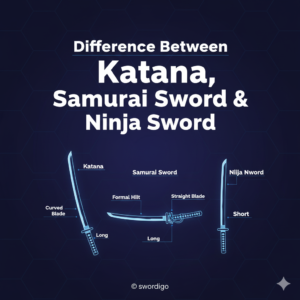
A Katana is a traditional Japanese sword recognized by its distinctive curved profile and single-edged blade.
A traditional Katana is generally associated with several characteristic features:
-
Curved blade profile
-
Single-edged construction
-
Distinctive handle and fittings
-
Traditional scabbard known as a Saya
-
Decorative guard known as a Tsuba
The exact dimensions, construction, and appearance of historical Katana varied depending on the period, swordsmith, school, and intended style.
Today, the word Katana is also commonly used for modern Katana-inspired collectible and display pieces.
History of the Katana
Origins of the Japanese Katana
Japanese sword-making developed over many centuries. During the medieval period, Japanese swordsmiths developed distinctive curved blade forms that eventually became closely associated with the Katana.
The development of these swords was influenced by changes in Japanese society, craftsmanship, materials, and historical circumstances.
Different periods produced different styles, proportions, and construction characteristics, making historical Japanese swords an important subject for collectors and researchers.
Katana and the Samurai
The Katana is strongly associated with the Samurai and Japan’s historical warrior class.
Beyond its physical form, the Katana became connected with ideas of discipline, loyalty, responsibility, and social identity.
The relationship between Samurai culture and the Katana is an important part of the sword’s historical and cultural significance.
The Meaning of the Katana
The Katana has become a powerful cultural symbol representing Japanese craftsmanship and historical tradition.
For collectors and enthusiasts today, it can represent:
-
Traditional craftsmanship
-
Japanese cultural heritage
-
Attention to detail
-
Historical appreciation
-
Artistic design
-
Discipline and tradition
Historical examples were also passed through generations and could become valuable family or cultural artifacts.
Anatomy of a Katana
Understanding the main components of a Katana helps explain its distinctive appearance.
Nagasa
Nagasa refers to the length of the blade and is an important measurement when studying Japanese swords.
Hamon
The Hamon is a visible pattern associated with traditional Japanese blade-making and heat-treatment techniques. It can vary considerably in appearance and is often appreciated for its artistic character.
Tsuba
The Tsuba is the guard positioned between the blade and handle. Historical Tsuba can feature highly detailed artistic designs.
Tsuka
The Tsuka is the handle assembly. Traditional examples can include carefully arranged wrapping and decorative materials.
Saya
The Saya is the traditional scabbard. Its design, finish, and decoration can vary depending on the period and style.
Together, these components create the distinctive visual identity of the Japanese Katana.
Traditional Katana Craftsmanship
Traditional Japanese sword-making involved highly specialized craftsmanship.
Historical swordsmiths worked carefully with steel and developed techniques that produced distinctive blade characteristics and surface patterns.
Other specialists could also contribute to the finished piece, including polishers and craftsmen responsible for fittings, handles, and scabbards.
The result was an object combining several different forms of traditional craftsmanship.
Traditional Materials
Historical Japanese sword-making is particularly associated with Tamahagane, a specialized steel traditionally produced using iron-bearing sand.
The preparation and selection of steel were important parts of the traditional process.
The final appearance of a traditional Japanese blade could reflect the material, craftsmanship, historical period, and individual maker.
Katana as Art and Craftsmanship
A Katana can be appreciated not only for its historical association but also for its visual and artistic qualities.
Collectors often pay attention to:
-
Blade profile
-
Surface characteristics
-
Hamon patterns
-
Tsuba design
-
Handle details
-
Saya decoration
-
Overall proportions
These details demonstrate why Japanese swords are often studied as examples of traditional craftsmanship and decorative art.
Katana Collection & Display
Today, Katana-inspired pieces are popular among collectors, enthusiasts, and people interested in Japanese culture.
They can be displayed in:
-
Private collections
-
Homes
-
Offices
-
Studios
-
Cultural displays
-
Themed interiors
For modern collectors, the appeal often comes from the combination of Japanese-inspired design, craftsmanship, historical interest, and visual presence.
Always follow applicable local laws and regulations regarding the ownership, display, transportation, and possession of any sword or sword-like object.
Traditional Katana vs. Modern Display Katana
| Feature | Traditional Japanese Katana | Modern Display / Collectible Katana |
|---|---|---|
| Historical significance | Historical and cultural | Inspired by traditional designs |
| Craftsmanship | Traditional specialist craftsmanship | Modern craftsmanship |
| Materials | Historically traditional materials | Varies by product |
| Purpose | Historical / cultural artifact | Collectible / decorative display |
| Production | Highly specialized | Varies by manufacturer |
Why Are Katana Popular Today?
The Katana continues to attract worldwide interest because of its distinctive combination of:
-
Japanese cultural heritage
-
Traditional craftsmanship
-
Unique design
-
Historical significance
-
Artistic detail
From museums and historical collections to modern decorative displays, the Katana remains an enduring symbol of Japanese craftsmanship.
Conclusion
The Japanese Katana represents centuries of history, craftsmanship, artistic development, and cultural heritage.
Its distinctive design and detailed construction continue to fascinate collectors and enthusiasts around the world.
Whether studied as a historical artifact or appreciated as a modern collectible display piece, the Katana remains one of the most recognizable examples of Japanese traditional craftsmanship.